Friday, 1 August 2014

ACCESS LAND – WATCH YOUR SPOKEN WORDS WHEN DEALING WITH RESOURCE COMPANIES!


It is a longstanding general rule in property law which says that if you are going to give away a right or interest in your Land, then this should be in writing. Unfortunately though, as new laws have been created to deal with Land Access for coal seam gas (CSG) and mining companies, this general and longstanding rule has been whittled away.

What is an Access Agreement?

Sometimes gas companies need access across blocks of land to get to the blocks of land under which the coal seam gas (CSG) might be found. The gas companies are required under the Petroleum and Gas legislation to enter into "Access Agreements" with landowners and occupiers of land. The right to come across the land is called an "Access Right" and it can include the right to construct roads or tracks across your Land to allow them to get to the area that they want to explore.

How can I give away access rights without an agreement in writing?

The Petroleum and Gas (Production and Safety) Act is currently drafted in such a way that Access Agreements or Access Rights can be given away orally.

How are Access Agreements different to Conduct and Compensation Agreements?

These Access Agreements are very different. There isn't even a need to compensate the Landowners or occupiers under an Access Agreements. Conduct and Compensation Agreements have to be in writing. If an oral agreement is made in regard to an Access Arrangement for say a road across the land, then this could be enough to allow a company to access and build the road on your Land. There is no requirement for compensation to be paid, but it can be negotiated.

If a Seller of Land enters into an oral agreement, and I buy the place, am I bound by this?

Yes. The law states that these agreements are binding on future owners of the Land. The fact that someone's word could bind up a property well into the future is obviously a very large problem and the law should be changed.

Surely the new laws about mining and gas will fix this won't they?

No. The laws in regard to Access Land are changing; however when the Mining and Energy Resources (Common Provisions) Bill 2014 was presented to Parliament on 5 June 2014, the problem with oral Access Agreements had not been addressed. It seems silly that a company might be allowed to build a large road on someone’s land without giving someone compensation, and without entering into a written agreement.

Every situation is different and because some things you even say now could be binding on you, you really should seek legal advice as soon as you are approached by a mining or gas company for access to your Land. It is also very important to look at whether or not your land is inside or outside the exploration area or tenement of a company to know what type of agreement you should be negotiating.

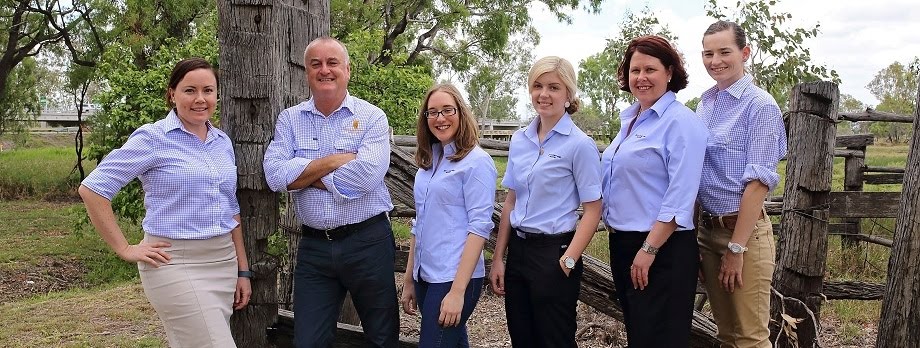
If you would like further information or have any questions please give Melanie Oliver, Amy Gudmann or Justin Houlihan a call on (07) 4927 6333

Monday, 14 July 2014

UPDATE ON THE GALILEE RAIL

In November late last year the State Government announced their Galilee Basin Development Strategy.

After months of consultation the size of the GBSDA has been reduced by 94 percent and new mapping has been released by the government.  Currently the GBSDA is around 500 metres wide and it will apparently be further reduced.  This is a good result for Landowners, but still further refinement of the area would provide more certainty for persons currently in “limbo”.

There have been statements made in the media that the declaration of the area will not affect Landowner’s rights. This is quite a naive statement. There is a large amount of difference between a landowner that has been negotiating with a private company who has limited rights to resume land, and the Co-ordinator General who can resume the Land and pay an amount of compensation specified by the law. There will be less commercial deals made and landowner’s rights to compensation and negotiation will be affected. Information on the mapping can be located here www.dsdip.qld.gov.au/gbsda.


If you are approached by a resource or rail company you should seek legal advice early in regard to the negotiations. There are differences in the process when you are negotiating with the government for a resumption compared to when you are negotiating with a private company for a sale or an easement.  If you are approached, we have a specialised mining and resumption team who can give you advice.  Please contact Melanie Oliver, Andrew Palmer, Amy Gudmann or Justin Houlihan at Rees R & Sydney Jones Solicitors on 4927 6333.

Monday, 5 May 2014

Landowner Time - can you claim it and how do you prove it?


It can be quite time consuming and inconvenient spending hours meeting with resource company representatives who want to do some drilling or exploring on your Land.   The question is “Can I charge the resource company for my time?”
Some resource companies are more generous than others.  They realise that your property is not only your home, but it is a business and time spent with them is not time on the Land. However, some companies take the unfortunate view that dealing with them is something just part of your job to manage your property and so they will not pay for Landowner Time.

The law states that if you are dealing with a gas or mining company who want to conduct Advanced Activities on your land you are entitled to receive compensation for any costs, damage or loss arising from the carrying out of the Activities.  The law does not specifically say anything about time.
Last year, the Land Court looked at the matter of Landowner’s time. The Land Court decided in that case, that the amount claimed by the Landowner for time was not payable by the resource company. The Land Court did say however that, Landowner time would only be paid “where such expenditure has been made and verified appropriately”.   So if a Landowner documents clearly and can verify the dates, times, reasons, conversations and parties to meetings, would the Land Court be more inclined to make an award of “time” to a Landowner?  The issue of Landowner Time is being looked at by the government so things could change to make things more certain.

Rees R & Sydney Jones provides assistance to Landowners to document their meetings and time spent with the company representatives to ensure that every occasion is recorded.  
If you would like further information or have any questions regarding to how best to document your meetings and your rights to Compensation, please give Andrew Palmer, Melanie Oliver, Amy Gudmann or Justin Houlihan a call on (07) 4927 6333

Tuesday, 1 April 2014

Water and the Resource Industry: Protecting Your Future


Think about your property – where does your water come from?  Dams?  Bores?  River?  A combination of those?  You might be one of those farmers or graziers that rely heavily on underground water sources as part of your day-to-day operations.  Have you ever considered what would happen if that underground water suddenly dried up? 

How can I protect my water supplies from coal mining or coal seam gas activities?
 
Coal Mining and CSG both extract huge volumes of ground water as part of their activities.  The closer you are to this activity, the higher the chance your water sources will be effected.  It is important that before a resource company starts their activities, both parties are aware of and agree on the current state of the water sources - current capacity, standing water levels, water quality etc.  This is usually called baseline data.   This information should be prepared by someone who has the relevant expertise.  It may be beneficial if the person collecting the information is independent of both you and the resource company, such as a hydro geologist or other expert.

You should also consider entering into what is called a “make good” agreement with the resource company.  This will cover ongoing monitoring of the water source, comparison with the baseline data, the identification of trigger levels for when a water source is considered impaired and what will happen if it is proven that the activities of a resource company have caused the decrease or loss of water.  A well drafted “make good” agreement will also include a provision for the refund of any fees paid by you for preparation of the agreement. 

If you would like any further information or have any questions regarding make good agreements or water agreements, please give Amy Gudmann, Andrew Palmer or Justin Houlihan at Rees R & Sydney Jones a call on (07) 4927 6333.  We can provide you with advice on a “make good” agreement to ensure that your business and your livelihood are protected.

Friday, 21 March 2014

Proposed changes to Resources Legislation


Discussion papers have recently been released by the Department of Natural Resources and Mines as part of the Modernising Queensland’s Resources Acts Program.  These papers address how to achieve a standardised consent framework for restricted land across all resources types, and propose changes in mining lease notifications and objections. 

The papers consider changing how a mining lease application under the Mineral Resources Act is advertised and the removal of the requirement to post a copy of the notice on the datum post.  This will require landowners to be more vigilant in monitoring advertisements which relate to mining projects which may have an impact on their land.

Currently, anyone can object to a Mining Lease Application.  However, under the proposed changes, only directly affected landowners and Local Governments will receive notification of the Mining Lease and have the right to object to the grant of the Mining Lease in the Land Court.

Substantial changes are proposed in the concept of “restricted land”.  Presently, the consent of a landowner is required if restricted land is to be included in the surface of the mining lease.  The proposed changes, if implemented, would eliminate “the hole” in a mining lease area which previously arose where a landowner did not consent to restricted land being included in the surface of the mining lease.  Changes are also proposed in how restricted land is identified and the distance within which activities are able to be conducted by the resource company is extended to 200 metres from a residence, Place of Worship, school or intensive animal husbandry.

It is important that landowners are aware of these discussion papers and the proposed amendments which are being considered.  Whilst the intent of most of the changes is to reduce cost and “red tape” and avoid duplication for resource companies, these proposed changes will have important implications for landowners and particular relevance to how they conduct negotiations for compensation with resource companies. 

If you have any questions in relation to this, please contact Andrew Palmer or Justin Houlihan at Rees R & Sydney Jones on 4927 6333.

Thursday, 6 March 2014

CONDUCTING SEARCHES WHEN PURCHASING A RURAL PROPERTY


When purchasing a rural property, there are a number of standard searches that can be conducted over a property that we recommend, including:

·         Local Area Mining Search – this search is a free search and advises of any mining or gas exploration activity or permits (applied for or granted) that may affect the property.

·         Local Council Rural Lands Search – this search advises of any orders issued under the Rural Lands Protection Act or Land Protection Act (Pest & Stock Route Management) Act 2002.  It will advise of any stock routes and pests that may affect the area.

·         Department of Agriculture, Fisheries and Forestry Land Status Search - the results of this search will include any chemical residue on the property, tick control and any quarantine issues that may affect the land at the present time or may have affected the land in the past. 

·         Department of Natural Resources and Mines Soil Conservation search – this search advises of any notices or judgements issued in relation to the property pursuant to the Soil Conservation Act 1986.

·         Powerlink Search – this search advises if there is any registered or proposed electrical works easement/s over the property that you as the buyer may not be aware of.

 If recommended searches are not obtained during the course of your conveyance then any issues, orders or notices affecting the property may become the responsibility of you as the new owner once settlement has been effected, so it is best to ensure that they are obtained for peace of mind.

Jade Scott is part of the Rural Division at local law firm Rees R & Sydney Jones.

Monday, 10 February 2014

Update on Galilee Basin State Development Area (GBSDA)

In November 2013, the Queensland Government released a paper entitled "Galilee Basin Development Strategy". In the document, great emphasis was placed upon the desire of the government to open up the Galilee Basin. One of the initiatives identified by the Government in achieving this aim was the streamlining of the land acquisition, planning and approvals process.
The Government has now released the fact sheet and a map of the proposed GBSDA and is undertaking consultation with various stakeholders. Included in the consultation will be landowners and the community affected by the proposed GBSDA.  The consultation will take place between January and March and the Government will consider feedback provided by stakeholders on the extent of the proposed GBSDA as well as a draft development scheme proposed for the GBSDA. The proposed GBSDA and the draft development scheme are available on the Department of State Development, Infrastructure and Planning website at www.dsdip.qld.gov.au/coordinatorgeneral/.  It is also proposed that officers of the Coordinator-General will visit Clermont, Moranbah, Collinsville and Glenden during March 2014 to have face-to-face meetings with some stakeholders.

If your property is within the area of the proposed GBSDA, then it is important that you are aware of the impacts that the declaration of the State Development Area and the likely impacts of the rail corridors may have on your property to enable you to make a meaningful submission to the Coordinator-General, so that all of the relevant impacts are properly considered.

If you need assistance or further information in relation to this, contact Andrew Palmer or Justin Houlihan at Rees R & Sydney Jones on 4927 6333.