Showing posts with label Mining. Show all posts

Thursday, 27 October 2016

CSG Wells and Your Mortgage

CSG Wells

There has been a bit of media attention lately regarding a bank turning down a loan application on grounds relating to some Coal Seam Gas operations on a property. An example of such a story can be found here.

https://www.theguardian.com/environment/2016/sep/30/commonwealth-bank-coal-seam-gas-makes-property-unacceptable-as-loan-security

Conduct and Compensation Agreement

It is usually a term of your bank mortgage that you must seek the consent of your bank prior to entering into any agreement for compensation relating to mining and/or gas activities on your property. It is therefore very important to provide a copy of any Compensation Agreement or CCA to your banker prior to signing any such document.

This will save you dealing with an angry mortgagee later and could have saved the landowners mentioned in the story attached from some problems.

If your bank is worried about any changes in the value of your land, then you can use their valuations or letters as a bargaining tool in your negotiations with a gas or mining company.

Sometimes, especially if the Activities to be performed on your land are quite substantial (e.g. a large gas pipeline), it is a good idea to chat with your banker about how your expected income stream on your property may be affected by gas or mining activities.

Your banker may like to hear from you about when any expected compensation money might be due to be paid to you so they can work with you in meeting the terms of your mortgage.


What can I do?

Conduct and Compensation Agreements for Mining and Gas Agreements are very complicated, and for this reason you should always involve your accountant, your lawyer and your banker at least in any negotiations you start. It is for this reason we would never advise a landowner to “Opt Out” of a negotiation.

The law also requires companies to reimburse landowner legal, accounting and valuation fees so it is always good to get advice on these types of negotiations.

Contact Energy, Environment & Agribusiness Partner, Melanie Findlay on (07) 4927 6333 or at enquire@reesjones.com.au.

Monday, 30 May 2016

Mining Lease Application Notices as at 26 May 2016


Each week, our Landowner Lawyer shares the Queensland Government Mining Lease Application Notices.

Details of current mining lease applications: Mining Notices as at 26 May 2016.

According to Queensland law, anyone can object to a mining lease application or current environmental authority application for a mining lease. The objection period is a minimum of 20 business days. Make sure your objection is lodged by 4.30 pm on the last day of objections.

If you believe you are affected by a mining lease application or if you would like further information, please contact our Energy, Environment & Agribusiness team on 07 4927 6333 or at enquire@reesjones.com.au.


Tuesday, 15 March 2016

What is Groundwater?

Capricornia Catchments groundwater

Did you know that groundwater makes up 98% of the liquid freshwater on the planet? 


Capricornia Catchments Groundwater
L-R Linda Munns, Emma Kime, Amy Gudmann
Last week, Emma Kime along with Amy Gudmann and Linda Munns of our Mining, Gas and Rural Team attended Capricornia Catchment's Getting to know your Groundwater Workshop held in Rockhampton. 

Emma said that "this workshop was a fantastic local event that was able to bring interested members of the community together to gain an understanding of groundwater and the extraction process, the local geology and the impacts of coal and coal seam gas developments on water resources."

Many of our client's have concerns about whether they are entitled to enter into a Make Good Agreement with mining and resource companies and how coal and coal seam gas developments may impact their water resources and bores. As a result, Emma enjoyed learning first-hand how graziers and landowners can be proactive in monitoring water levels and measuring the quality of their bores on an ongoing basis to collate data that may then be used as part of a Baseline Assessment. 

Emma also enjoyed connecting with local community members and hearing the concerns that locals have with their bores and why they choose to attend the Getting to know your Groundwater Workshop.

If you would like to discuss how the Mining, Gas and Rural Team can assist you with any concerns that you may have about your bore or whether you are entitled to enter into a Make Good Agreement, please do not hesitate to contact us on (07) 4927 6333 or enquire@reesjones.com.au.


Wednesday, 24 February 2016

SIGN HERE: Petition to the Turnbull Government to Establish a Royal Commission into the Human Impact of CSG Mining


Senator for Queensland, Glen Lazarus is seeking public support to call on the Turnbull Government to establish a Royal Commission into the Human Impact of CSG mining.

In relation to coal seam gas mining (CSG) in Queensland, Senator Lazarus has expressed that "the resource sector is an important industry for Australia, but as a country, we can not allow the health of our people to be compromised" and that "all levels of Government have let the people of Australia down allowing the unfettered growth of an industry which is known to be harmful to the environment, human health, communities and ultimately our future."*

To show your support for establishing a Royal Commission, you may like to sign the petition at the following link:- https://www.change.org/p/the-abbott-government-establish-a-royal-commission-into-the-human-impact-of-csg-mining

For more information on Senator Lazarus's stance on CSG mining and what he is campaigning for, see the following link:- http://senatorlazarus.com/csg-inquiry/.


*Senator Glen Lazarus, 'Establish a Royal Commission into the Human Impact of CSG mining' <https://www.change.org/p/the-abbott-government-establish-a-royal-commission-into-the-human-impact-of-csg-mining>.

Wednesday, 2 December 2015

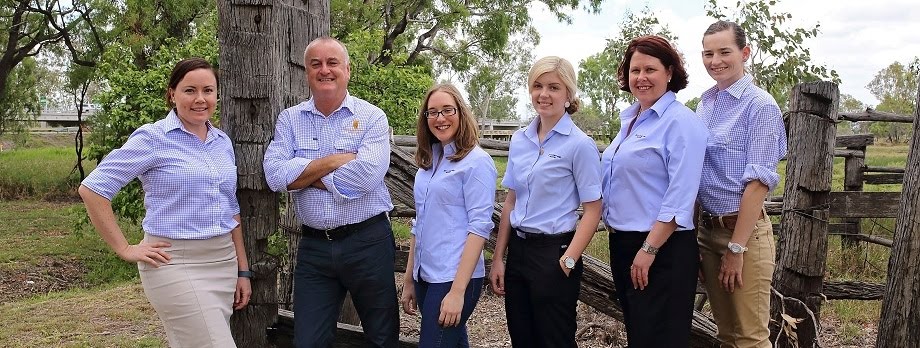
Jade Hayman, Consultant Andrew Palmer, Amy Gudmann 
and Rural Partners Justin Houlihan & Melanie Findlay


Landowners Solar Farm Opportunities - Could this be a viable on-farm income for you?

Off Farm income streams are always being looked at by Graziers and Farmers, but what about if your rural property could provide you with a different form of “on-farm” income.

Central Queensland is becoming a hot spot for large scale solar installations or Solar Farms. Under the Solar 60 Program, the Qld Government is calling for tenders and will provide financial assistance to solar and renewable energy companies to develop 60MW large-scale solar farms. The Australian Renewable Energy Agency (ARENA) and the Clean Energy Finance Corporation (CEFC) have also committed more than A$100 million to drive the development of large-scale solar projects in Australia.

With funding for large-scale solar projects available, Landowners are being approached by solar and renewable energy companies for the rights to investigate and build solar farms on their land. Origin Energy has even indicated that there is a “Prospecting Race” for solar projects in Queensland. 

If you have any queries about opportunities in Solar or using your property for clean energy or renewable projects, please contact Melanie Findlay and Emma Kime of the Rees R & Sydney Jones Rural, Mining and Gas Agribusiness team on 4927 6333.


Tuesday, 17 November 2015


Landowners Solar Farm Opportunities

Off Farm income streams are always being looked at by Graziers and Farmers, but what about if your rural property could provide you with a different form of “on-farm” income.

Central Queensland is becoming a hot spot for large scale solar installations or Solar Farms. Under the Solar 60 Program, the Queensland Government is calling for tenders and will provide financial assistance to solar and renewable energy companies to develop 60MW large-scale solar farms. The Australian Renewable Energy Agency (ARENA) and the Clean Energy Finance Corporation (CEFC) have also committed more than A$100 million to drive the development of large-scale solar projects in Australia.

With funding for large-scale solar projects available, Landowners are being approached by solar and renewable energy companies for the rights to investigate and build solar farms on their land. Origin Energy has even indicated that there is a “Prospecting Race” for solar projects in Queensland. 

If you have any queries about opportunities in Solar or using your property for clean energy or renewable projects, please contact Rural, Mining and Gas Partner, Melanie Findlay of local firm Rees R & Sydney Jones on 07 4927 6333.

Thursday, 6 March 2014

CONDUCTING SEARCHES WHEN PURCHASING A RURAL PROPERTY


When purchasing a rural property, there are a number of standard searches that can be conducted over a property that we recommend, including:

·         Local Area Mining Search – this search is a free search and advises of any mining or gas exploration activity or permits (applied for or granted) that may affect the property.

·         Local Council Rural Lands Search – this search advises of any orders issued under the Rural Lands Protection Act or Land Protection Act (Pest & Stock Route Management) Act 2002.  It will advise of any stock routes and pests that may affect the area.

·         Department of Agriculture, Fisheries and Forestry Land Status Search - the results of this search will include any chemical residue on the property, tick control and any quarantine issues that may affect the land at the present time or may have affected the land in the past. 

·         Department of Natural Resources and Mines Soil Conservation search – this search advises of any notices or judgements issued in relation to the property pursuant to the Soil Conservation Act 1986.

·         Powerlink Search – this search advises if there is any registered or proposed electrical works easement/s over the property that you as the buyer may not be aware of.

 If recommended searches are not obtained during the course of your conveyance then any issues, orders or notices affecting the property may become the responsibility of you as the new owner once settlement has been effected, so it is best to ensure that they are obtained for peace of mind.

Jade Scott is part of the Rural Division at local law firm Rees R & Sydney Jones.

Monday, 10 February 2014

Update on Galilee Basin State Development Area (GBSDA)

In November 2013, the Queensland Government released a paper entitled "Galilee Basin Development Strategy". In the document, great emphasis was placed upon the desire of the government to open up the Galilee Basin. One of the initiatives identified by the Government in achieving this aim was the streamlining of the land acquisition, planning and approvals process.
The Government has now released the fact sheet and a map of the proposed GBSDA and is undertaking consultation with various stakeholders. Included in the consultation will be landowners and the community affected by the proposed GBSDA.  The consultation will take place between January and March and the Government will consider feedback provided by stakeholders on the extent of the proposed GBSDA as well as a draft development scheme proposed for the GBSDA. The proposed GBSDA and the draft development scheme are available on the Department of State Development, Infrastructure and Planning website at www.dsdip.qld.gov.au/coordinatorgeneral/.  It is also proposed that officers of the Coordinator-General will visit Clermont, Moranbah, Collinsville and Glenden during March 2014 to have face-to-face meetings with some stakeholders.

If your property is within the area of the proposed GBSDA, then it is important that you are aware of the impacts that the declaration of the State Development Area and the likely impacts of the rail corridors may have on your property to enable you to make a meaningful submission to the Coordinator-General, so that all of the relevant impacts are properly considered.

If you need assistance or further information in relation to this, contact Andrew Palmer or Justin Houlihan at Rees R & Sydney Jones on 4927 6333.


Monday, 2 December 2013

Progress in the Galilee Basin

The State Government has recently announced the development of "the Galilee Basin Development Strategy".  The strategy is aimed at the early development of the southern and central Galilee Basin which includes a proposal to streamline land acquisition.

The Government has proposed that it will create the Galilee Basin State Development Area ("GBSDA"), which will be over a large area which has not yet been defined. It is proposed that the rail corridors will then be constructed within the GBSDA. The Government has stated that "before considering compulsory land acquisitions the Government will strike the right balance between interests of stakeholders, including land holders and the community. It will encourage incremental expansion where feasible and ask proponents to minimise impact on land holders and the environment whenever possible."  It would seem, from these comments, that the Government will not initially resume the land and will encourage each proponent to enter into negotiations with the land holders. However, it is clear that if agreements cannot be reached between the relevant proponent and respective land holders, then the Government will use its power to compulsorily acquire land for the construction of the railway pursuant to the State Development and Public Works Organisation Act.

The Strategy indicates that the State Government will give consideration to whether it will declare the GBSDA in early 2014. This will then indicate the extent of the area of the GBSDA and the likely properties which will be affected.

For any advice or assistance in relation to the impact of the GBSDA, please contact Andrew Palmer or Justin Houlihan from local law firm Rees R & Sydney Jones on 07 4927 6333.

Friday, 15 November 2013

Drilling Wells – know the full impact first.

It all started when some nice bloke “from a property around here” had coffee with you one day and told you his company wanted to drill a couple of holes on your land – “down the back paddock, only about the size of half a basketball court, you won’t even know it’s there.”

This might be true once the well is completed, however during intensive construction, drilling occurs 24 hours a day and the drilling team needs a lot more space for all their gear, trucks, dongas and other equipment.  The more space the resource company takes up, the less space you have to run your business on.

It is very important to get as much information and detail as you can about what a resource company intends to do if they want to drill on your land - how long they need to do it (number of days); how much area they require; and how they will conduct themselves.  You should be able to receive detailed information for both the overall project and each stage of the activities. For example, the company may need to build a new road to get their well site.  They will have 1 bulldozer, 2 graders and 3 trucks, with 6 personnel, and will take 2 weeks to build their road at a rate of 500m/day.  The locations of the new tracks should be marked clearly on a map included in your agreement.   All company vehicles should be parked in a designated area.

The more detailed and more accurate the information you have available to you and included in your agreement, the better you can assess the true impact of the well (both lost income and day-to-day disturbances) and not be caught out with any surprises later on.  Be aware of the implications of lines such as “and any incidental activities necessary or convenient”.  If included in your agreement, six months down the track “convenient” for the company could be to lay a pipeline between two sites and you would not be able to claim more compensation for the additional disturbance. This is why is it important to have clear and concise terms in your agreement – exactly what the company can do, where they can do it and how long they have to get it done.

Being aware of what you are signing will ensure that you do not sacrifice your long term productivity, planning and sustainability.

Amy Gudmann is a solicitor in the Rural division at local law firm Rees R & Sydney Jones Solicitors.

Friday, 11 October 2013

Vegetation Offsets: a means of generating additional income while effectively managing your land.


All too often these days, landowners are being approached by resource companies seeking access to conduct activities that may disturb the landholder's grazing or farming enterprise possibly having a lasting negative impact on the land.  Recently, however, we have been assisting some landowners to enter into a new type of arrangement with resource and infrastructure companies that compensate landholders for managing the vegetation on their land. The companies engage landowners to manage the vegetation on their land in accordance with a vegetation management plan.

If your land contains quality regrowth or remnant vegetation, offsets may prove beneficial to your enterprise. Generally, areas suitable for offsets need to:
1. be larger than two hectares in size;
2. adjoin existing remnant vegetation; and
3. contain minimal weeds.

Under the Law, companies undertaking an offset project are required to secure their offset.  To do so, they will seek to enter into a legal agreement with the owner of the land on which suitable vegetation is to be preserved and managed.   In order to establish an offset area, a resource company will require security for the offset, usually by way of registration of a voluntary declaration on title. Furthermore, for the term of the agreement there will be restrictions on how you use your land.
For advice or information on vegetation offsets or for the review of any documentation, please contact Sarah Bell or Andrew Palmer at Rees R & Sydney Jones Solicitors on (07) 4927 6333.


Tuesday, 24 September 2013

Chemical Use by Resource Companies


What are the implications if a resource company forgets to tell you about that patch of parthenium they sprayed last week and you’ve got no idea what the chemical is or what it does, or if there are any withholding periods?  Or what about that puddle of fraccing water that your cattle just walked through because of a burst pipe?  As a National Vendor Declaration (NVD) is a legal document, it must be filled in correctly to safeguard against being issued with serious penalties for supplying incorrect information.
 
The NVD asks questions about chemical residue, withholding periods and where your cattle have been grazing for the last 60 days.  Even though you know what chemicals you have on your property and you know where you’ve used them, what about the resource company? 

Resources companies should need to get your consent to chemical use before they start and it’s really important to have a clause covering chemical usage in your access agreement with the resource company.  A good access agreement will cover what happens if there is a problem and provide details of how to fix it.
Negotiating Access Agreements can be a time consuming exercise, but this is your life, your home and your livelihood – so it is well worth investing some time to make sure there are no major disruptions to your business and your income.

Anyone with questions or concerns about covering chemical usage in an access agreement, please feel free to contact Melanie Oliver or Amy Gudmann at Rees R & Sydney Jones Solicitors on (07) 4927 6333.