Showing posts with label Gas. Show all posts

Thursday, 27 October 2016

CSG Wells and Your Mortgage

CSG Wells

There has been a bit of media attention lately regarding a bank turning down a loan application on grounds relating to some Coal Seam Gas operations on a property. An example of such a story can be found here.

https://www.theguardian.com/environment/2016/sep/30/commonwealth-bank-coal-seam-gas-makes-property-unacceptable-as-loan-security

Conduct and Compensation Agreement

It is usually a term of your bank mortgage that you must seek the consent of your bank prior to entering into any agreement for compensation relating to mining and/or gas activities on your property. It is therefore very important to provide a copy of any Compensation Agreement or CCA to your banker prior to signing any such document.

This will save you dealing with an angry mortgagee later and could have saved the landowners mentioned in the story attached from some problems.

If your bank is worried about any changes in the value of your land, then you can use their valuations or letters as a bargaining tool in your negotiations with a gas or mining company.

Sometimes, especially if the Activities to be performed on your land are quite substantial (e.g. a large gas pipeline), it is a good idea to chat with your banker about how your expected income stream on your property may be affected by gas or mining activities.

Your banker may like to hear from you about when any expected compensation money might be due to be paid to you so they can work with you in meeting the terms of your mortgage.


What can I do?

Conduct and Compensation Agreements for Mining and Gas Agreements are very complicated, and for this reason you should always involve your accountant, your lawyer and your banker at least in any negotiations you start. It is for this reason we would never advise a landowner to “Opt Out” of a negotiation.

The law also requires companies to reimburse landowner legal, accounting and valuation fees so it is always good to get advice on these types of negotiations.

Contact Energy, Environment & Agribusiness Partner, Melanie Findlay on (07) 4927 6333 or at enquire@reesjones.com.au.

Tuesday, 15 March 2016

What is Groundwater?

Capricornia Catchments groundwater

Did you know that groundwater makes up 98% of the liquid freshwater on the planet? 


Capricornia Catchments Groundwater
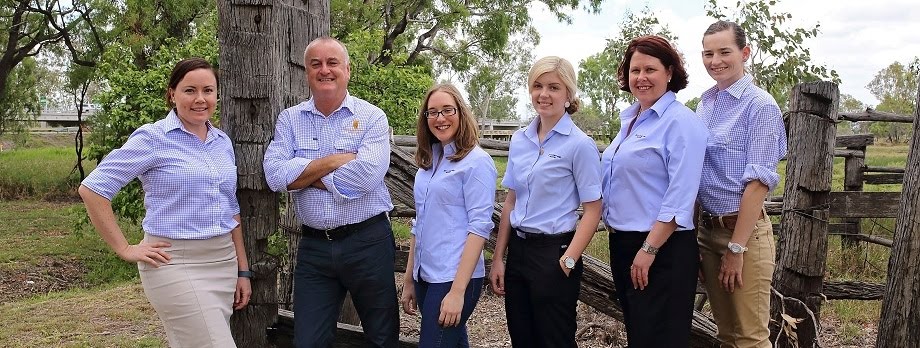
L-R Linda Munns, Emma Kime, Amy Gudmann
Last week, Emma Kime along with Amy Gudmann and Linda Munns of our Mining, Gas and Rural Team attended Capricornia Catchment's Getting to know your Groundwater Workshop held in Rockhampton. 

Emma said that "this workshop was a fantastic local event that was able to bring interested members of the community together to gain an understanding of groundwater and the extraction process, the local geology and the impacts of coal and coal seam gas developments on water resources."

Many of our client's have concerns about whether they are entitled to enter into a Make Good Agreement with mining and resource companies and how coal and coal seam gas developments may impact their water resources and bores. As a result, Emma enjoyed learning first-hand how graziers and landowners can be proactive in monitoring water levels and measuring the quality of their bores on an ongoing basis to collate data that may then be used as part of a Baseline Assessment. 

Emma also enjoyed connecting with local community members and hearing the concerns that locals have with their bores and why they choose to attend the Getting to know your Groundwater Workshop.

If you would like to discuss how the Mining, Gas and Rural Team can assist you with any concerns that you may have about your bore or whether you are entitled to enter into a Make Good Agreement, please do not hesitate to contact us on (07) 4927 6333 or enquire@reesjones.com.au.


Tuesday, 17 November 2015


Landowners Solar Farm Opportunities

Off Farm income streams are always being looked at by Graziers and Farmers, but what about if your rural property could provide you with a different form of “on-farm” income.

Central Queensland is becoming a hot spot for large scale solar installations or Solar Farms. Under the Solar 60 Program, the Queensland Government is calling for tenders and will provide financial assistance to solar and renewable energy companies to develop 60MW large-scale solar farms. The Australian Renewable Energy Agency (ARENA) and the Clean Energy Finance Corporation (CEFC) have also committed more than A$100 million to drive the development of large-scale solar projects in Australia.

With funding for large-scale solar projects available, Landowners are being approached by solar and renewable energy companies for the rights to investigate and build solar farms on their land. Origin Energy has even indicated that there is a “Prospecting Race” for solar projects in Queensland. 

If you have any queries about opportunities in Solar or using your property for clean energy or renewable projects, please contact Rural, Mining and Gas Partner, Melanie Findlay of local firm Rees R & Sydney Jones on 07 4927 6333.

Thursday, 6 March 2014

CONDUCTING SEARCHES WHEN PURCHASING A RURAL PROPERTY


When purchasing a rural property, there are a number of standard searches that can be conducted over a property that we recommend, including:

·         Local Area Mining Search – this search is a free search and advises of any mining or gas exploration activity or permits (applied for or granted) that may affect the property.

·         Local Council Rural Lands Search – this search advises of any orders issued under the Rural Lands Protection Act or Land Protection Act (Pest & Stock Route Management) Act 2002.  It will advise of any stock routes and pests that may affect the area.

·         Department of Agriculture, Fisheries and Forestry Land Status Search - the results of this search will include any chemical residue on the property, tick control and any quarantine issues that may affect the land at the present time or may have affected the land in the past. 

·         Department of Natural Resources and Mines Soil Conservation search – this search advises of any notices or judgements issued in relation to the property pursuant to the Soil Conservation Act 1986.

·         Powerlink Search – this search advises if there is any registered or proposed electrical works easement/s over the property that you as the buyer may not be aware of.

 If recommended searches are not obtained during the course of your conveyance then any issues, orders or notices affecting the property may become the responsibility of you as the new owner once settlement has been effected, so it is best to ensure that they are obtained for peace of mind.

Jade Scott is part of the Rural Division at local law firm Rees R & Sydney Jones.

Tuesday, 29 October 2013

Changes to Land Access Laws Update


There is currently a lot of activity in our region in regards to mining and gas. This article looks at the land access laws for resource exploration that you may not yet be aware of.

Why are resource companies allowed access to my land to take resources?

In most situations, the resources that are located under the land do not belong to landowners. The law states that they generally belong to the people of Queensland. So ownership of natural resources like gas, coal, gold and minerals that are underground do not transfer to a purchaser who is buying a property.

Can I stop a resource company from coming onto my land to look for resources?

Provided that they possess the relevant authority and the correct entry notices are given to you, a resource company can come onto your land upon giving 10 business days notice unless you waive this right under an agreement.  They can only do this though, to conduct what is known as “preliminary activities”.  The activities that are described as preliminary are generally relatively minor. Should they wish to engage in “advanced activity”, which basically is any activity that breaks the top soil on your land, they will be required to enter into a compensation agreement with you.

How do I know which companies have authority to access my land?

The Department of Natural Resources and Mines now allows landowners to conduct searches on the internet which display reports for free. This allows you to see who has the right to explore on your property. This is an important tool for you to determine exactly who may have rights associated with your land.

What if a resource company says they want to say drill on my land, can I stop them?

If a resource company wants to conduct activities on your land that will cause an impact to your business or land use, then they cannot start those activities until they have signed a contract with you for compensation. You are legally entitled to be compensated for any loss you suffer.

Can I just refuse to sign any contracts – will that stop them coming onto my land?

No, it won’t. If you simply refuse to negotiate, the resource company might take you to the Land Court. The resource company can only do this if they have given all the proper notices and tried, to a reasonable standard to negotiate with you. Once the Land Court has issued their orders about compensation, the resource company would then be able to come onto your land.

You can however seek advice to ensure that you have considered all options before signing the contract.  Under the laws relating to land access, if a resource company wants a compensation agreement with you, then they are required to pay for any reasonable legal, accounting and valuation fees that you incur in sorting out your agreements. It therefore makes good sense to see a professional as soon as you are approached by a resource company.
 

Tuesday, 24 September 2013

Chemical Use by Resource Companies


What are the implications if a resource company forgets to tell you about that patch of parthenium they sprayed last week and you’ve got no idea what the chemical is or what it does, or if there are any withholding periods?  Or what about that puddle of fraccing water that your cattle just walked through because of a burst pipe?  As a National Vendor Declaration (NVD) is a legal document, it must be filled in correctly to safeguard against being issued with serious penalties for supplying incorrect information.
 
The NVD asks questions about chemical residue, withholding periods and where your cattle have been grazing for the last 60 days.  Even though you know what chemicals you have on your property and you know where you’ve used them, what about the resource company? 

Resources companies should need to get your consent to chemical use before they start and it’s really important to have a clause covering chemical usage in your access agreement with the resource company.  A good access agreement will cover what happens if there is a problem and provide details of how to fix it.
Negotiating Access Agreements can be a time consuming exercise, but this is your life, your home and your livelihood – so it is well worth investing some time to make sure there are no major disruptions to your business and your income.

Anyone with questions or concerns about covering chemical usage in an access agreement, please feel free to contact Melanie Oliver or Amy Gudmann at Rees R & Sydney Jones Solicitors on (07) 4927 6333.

Thursday, 20 September 2012

When is a Pipeline - Not a Pipeline?

Pop Quiz!

I'm going to ask you a question about Pipelines.


What is "A Pipeline"?


The most common answer is a single round piece of polypipe right?

Wrong!

"A Pipeline", if we look at the Petroleum and Gas Act is a lot more than just "A Pipeline".

In Queensland, under that Act, A Pipeline means a pipe or a system of pipes for transporting petroleum, fuel, water or certain gases.

So "A Pipeline" means a "System of Pipelines".

Landowners need to be very careful when they assess the compensation offered to them by Pipeline Companies. Should you be receiving compensation for one Pipeline, or a System of Pipelines?

Are you looking at accepting compensation just for "A Pipeline"?