Wednesday, 27 January 2016

What's all this Paris stuff?

Beef Herd Management


Last year COP21 occurred in Paris. The 196 Parties agree to the terms of an Agreement which is to be signed in New York in April this year. If it gets signed the parties to the Agreement will be required to action their goals that were set at the Paris conference. Australia promised to reduce GHG emissions by 26-28% below 2005 levels by 2030. We promised to do this using the Emissions Reduction Fund which purchases emission reduction credits and we also promised to increase our Renewable Energy Target to 23% by 2020. 

What this will mean for our agricultural clients is that there are new investments in reforestation projects and forestry offsets. Carbon projects could become tradable internationally and so projects through the Emissions Reduction Fund will become popular. Landowners can benefit from approved method projects like Beef Herd Management, sequestering carbon in soils in grazing, feeding nitrates to cattle, avoiding clearing of native regrowth and Savanna fire management projects just to name a few. Perform these in accordance with the rules and credits or money could be earnt.

The signals are that reliance on fossils fuels will reduce (these can still be offset using sinks, CCS etc) and there will be an accelerated growth in clean energy and renewables. ARENA for example funded over $22M towards the Barcaldine Community Solar Farm. Some projects like this could be located on private land and agreements reached with private companies who wish to construct these renewable projects.

Grazing may still be grazing, but what if you just grazed a little differently and were paid to reduce your GHG omissions or the GHG omissions of some other polluter in another country?”

Monday, 11 January 2016

Uncertainty over Rockhampton’s Beef Loop Road

In 2011 planning and studies were done in regard to the Fitzroy River Floodplain and Road Planning Strategy (the Rockhampton Ring Road or Rockhampton By-Pass). The idea was to push trucks away from the centre of town via a bridge over the Fitzroy at Pink Lilly and around town rather than traffic going through town. Stage 4 of the plan included the third bridge.  No funding announcements or any construction date has been provided. 

There is now a renewed push for a connection to allow larger trucks to connect the new bridge to Lakes Creek Road so as to provide a better route for beef trucks to access the meatworks.

Although the projects would have great benefits for the cattle industry, landowners in the vicinity of the proposed routes are left in limbo waiting for movement. It is difficult for people in this position to decide whether or not to sell their properties, to improve them or to attend meetings with government departments. Compensation discussions can be intimidating and emotional. There are very few things as daunting on a person as the possibility of losing their home or property. The plans do include the resumptions or the taking of land and houses and some other properties for ramps for example. 

You are entitled to receive your reasonable legal fees reimbursed to you if your land is resumed or your land is taken by a government department. You are also entitled under the law to receive an advanced payment once you have lodged a claim to assist you to move and carry on with your life. If you are approached by any government department or council about the taking of your land for any purpose it is important to seek legal advice at an early stage so that you can make informed decisions about moving on or achieving the best result possible. 


Melanie Findlay is a Partner in the Rural, Mining & Gas Division of local law firm Rees R & Sydney Jones.

Wednesday, 2 December 2015

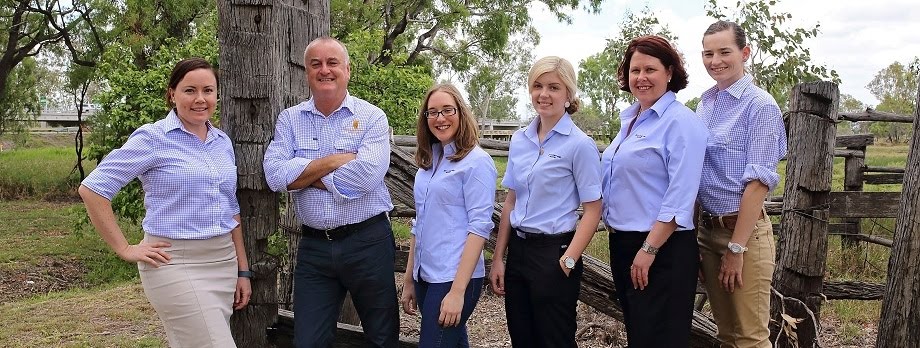
Jade Hayman, Consultant Andrew Palmer, Amy Gudmann 
and Rural Partners Justin Houlihan & Melanie Findlay


Landowners Solar Farm Opportunities - Could this be a viable on-farm income for you?

Off Farm income streams are always being looked at by Graziers and Farmers, but what about if your rural property could provide you with a different form of “on-farm” income.

Central Queensland is becoming a hot spot for large scale solar installations or Solar Farms. Under the Solar 60 Program, the Qld Government is calling for tenders and will provide financial assistance to solar and renewable energy companies to develop 60MW large-scale solar farms. The Australian Renewable Energy Agency (ARENA) and the Clean Energy Finance Corporation (CEFC) have also committed more than A$100 million to drive the development of large-scale solar projects in Australia.

With funding for large-scale solar projects available, Landowners are being approached by solar and renewable energy companies for the rights to investigate and build solar farms on their land. Origin Energy has even indicated that there is a “Prospecting Race” for solar projects in Queensland. 

If you have any queries about opportunities in Solar or using your property for clean energy or renewable projects, please contact Melanie Findlay and Emma Kime of the Rees R & Sydney Jones Rural, Mining and Gas Agribusiness team on 4927 6333.


Thursday, 19 November 2015

Strategic Offset Investment Corridors - Southern Brigalow Belt and New England Tableland


Landowners in the Southern Brigalow Belt Strategic Offset Investment Corridors will be interested in the release of the Southern Brigalow Belt and New England Tableland Strategic Offset Investment Corridors Methodology Report.

Strategic Offset Investment Corridors (SOICs) identify some of the best places in the landscape for environmental offsets. SOICs make offsets easier and cheaper to find, provide income opportunities for landholders willing to provide offsets on their land, and provide strategic conservation benefits for important environmental values.

Melanie Oliver explains the benefits to Landowners of a voluntary offset agreement here.

Tuesday, 17 November 2015


Landowners Solar Farm Opportunities

Off Farm income streams are always being looked at by Graziers and Farmers, but what about if your rural property could provide you with a different form of “on-farm” income.

Central Queensland is becoming a hot spot for large scale solar installations or Solar Farms. Under the Solar 60 Program, the Queensland Government is calling for tenders and will provide financial assistance to solar and renewable energy companies to develop 60MW large-scale solar farms. The Australian Renewable Energy Agency (ARENA) and the Clean Energy Finance Corporation (CEFC) have also committed more than A$100 million to drive the development of large-scale solar projects in Australia.

With funding for large-scale solar projects available, Landowners are being approached by solar and renewable energy companies for the rights to investigate and build solar farms on their land. Origin Energy has even indicated that there is a “Prospecting Race” for solar projects in Queensland. 

If you have any queries about opportunities in Solar or using your property for clean energy or renewable projects, please contact Rural, Mining and Gas Partner, Melanie Findlay of local firm Rees R & Sydney Jones on 07 4927 6333.

Friday, 30 October 2015


Are you impacted by the Emerald Flood Levee Banks?

Multiple flood events have caused considerable trouble and heartache for Emerald businesses and residents.  To better protect the city and minimise flood impacts, Central Highlands Regional Council have developed the Emerald Flood Protection Scheme ("EFPS").  The EFPS consists of several separate levee banks and was considered to be the most economic option for flood mitigation.

As with any development though, Council will need land for the levees to be constructed on and home owners may face the uncertainty of if the levee will go ahead and if their property will be ones of those Council needs.  In an already volatile property market, this has already caused effects on market value and saleability of homes in the area and left a few home owners in an uncertain position.  This uncertainty for home owners has led to Council releasing the Emerald Flood Protection Scheme Acquisition Policy.  This policy allows for a team of Council representatives to negotiate directly with home owners on a one-on-one basis for a voluntary option to acquire their property in the future. 

Any acquisition option negotiated will not proceed unless, and until, the final decision to proceed with the levies has been made.   The Acquisition Policy negotiations will be open to landowners for a period from 31 August, 2015, to 30 November, 2015 and Council has agreed to meet any reasonable legal and valuation costs incurred by the property owner negotiating an acquisition option with Council.

Directly affected landowners are not required to participate in these Acquisition Policy negotiations and if the levee proposal goes ahead, resumption action may be taken by Council for those properties not already covered by a voluntary acquisition option.

Wednesday, 2 September 2015

CHANGES TO BIOSECURITY AND QUARANTINE – ARE YOU READY?


The new Biosecurity Act 2014 has been recently passed by Parliament and will replace the Quarantine Act 1908 in mid 2016.  The old Quarantine Act was originally designed to protect us from outbreaks of small pox and the bubonic plague. The old Act had been amended on numerous occasions, but the new risks that we face are very different these days and so the new Act is designed for more effective management of modern risks.

Queenslanders will need to report unusual events that might be related to biosecurity, for example, abnormally high mortality or morbidity rates in animals and sudden unexplained falls in production.  They will also have obligations for registering some animals and reporting their movements to allow for disease tracing.  The new Act will improve Queensland's biosecurity preparedness and response capabilities to assist rural property owners. 
 
If you have any questions, please contact Jade Hayman from the Rural Mining & Gas Team at Rees R & Sydney Jones Solicitors.