Wednesday, 2 December 2015

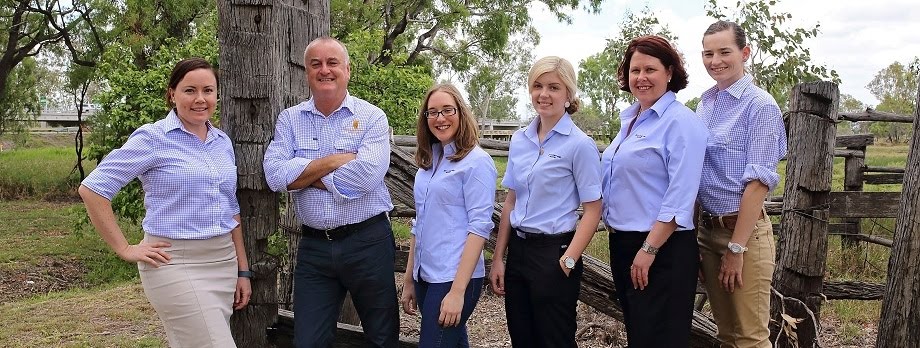
Jade Hayman, Consultant Andrew Palmer, Amy Gudmann 
and Rural Partners Justin Houlihan & Melanie Findlay


Landowners Solar Farm Opportunities - Could this be a viable on-farm income for you?

Off Farm income streams are always being looked at by Graziers and Farmers, but what about if your rural property could provide you with a different form of “on-farm” income.

Central Queensland is becoming a hot spot for large scale solar installations or Solar Farms. Under the Solar 60 Program, the Qld Government is calling for tenders and will provide financial assistance to solar and renewable energy companies to develop 60MW large-scale solar farms. The Australian Renewable Energy Agency (ARENA) and the Clean Energy Finance Corporation (CEFC) have also committed more than A$100 million to drive the development of large-scale solar projects in Australia.

With funding for large-scale solar projects available, Landowners are being approached by solar and renewable energy companies for the rights to investigate and build solar farms on their land. Origin Energy has even indicated that there is a “Prospecting Race” for solar projects in Queensland. 

If you have any queries about opportunities in Solar or using your property for clean energy or renewable projects, please contact Melanie Findlay and Emma Kime of the Rees R & Sydney Jones Rural, Mining and Gas Agribusiness team on 4927 6333.


Thursday, 19 November 2015

Strategic Offset Investment Corridors - Southern Brigalow Belt and New England Tableland


Landowners in the Southern Brigalow Belt Strategic Offset Investment Corridors will be interested in the release of the Southern Brigalow Belt and New England Tableland Strategic Offset Investment Corridors Methodology Report.

Strategic Offset Investment Corridors (SOICs) identify some of the best places in the landscape for environmental offsets. SOICs make offsets easier and cheaper to find, provide income opportunities for landholders willing to provide offsets on their land, and provide strategic conservation benefits for important environmental values.

Melanie Oliver explains the benefits to Landowners of a voluntary offset agreement here.

Tuesday, 17 November 2015


Landowners Solar Farm Opportunities

Off Farm income streams are always being looked at by Graziers and Farmers, but what about if your rural property could provide you with a different form of “on-farm” income.

Central Queensland is becoming a hot spot for large scale solar installations or Solar Farms. Under the Solar 60 Program, the Queensland Government is calling for tenders and will provide financial assistance to solar and renewable energy companies to develop 60MW large-scale solar farms. The Australian Renewable Energy Agency (ARENA) and the Clean Energy Finance Corporation (CEFC) have also committed more than A$100 million to drive the development of large-scale solar projects in Australia.

With funding for large-scale solar projects available, Landowners are being approached by solar and renewable energy companies for the rights to investigate and build solar farms on their land. Origin Energy has even indicated that there is a “Prospecting Race” for solar projects in Queensland. 

If you have any queries about opportunities in Solar or using your property for clean energy or renewable projects, please contact Rural, Mining and Gas Partner, Melanie Findlay of local firm Rees R & Sydney Jones on 07 4927 6333.

Friday, 30 October 2015


Are you impacted by the Emerald Flood Levee Banks?

Multiple flood events have caused considerable trouble and heartache for Emerald businesses and residents.  To better protect the city and minimise flood impacts, Central Highlands Regional Council have developed the Emerald Flood Protection Scheme ("EFPS").  The EFPS consists of several separate levee banks and was considered to be the most economic option for flood mitigation.

As with any development though, Council will need land for the levees to be constructed on and home owners may face the uncertainty of if the levee will go ahead and if their property will be ones of those Council needs.  In an already volatile property market, this has already caused effects on market value and saleability of homes in the area and left a few home owners in an uncertain position.  This uncertainty for home owners has led to Council releasing the Emerald Flood Protection Scheme Acquisition Policy.  This policy allows for a team of Council representatives to negotiate directly with home owners on a one-on-one basis for a voluntary option to acquire their property in the future. 

Any acquisition option negotiated will not proceed unless, and until, the final decision to proceed with the levies has been made.   The Acquisition Policy negotiations will be open to landowners for a period from 31 August, 2015, to 30 November, 2015 and Council has agreed to meet any reasonable legal and valuation costs incurred by the property owner negotiating an acquisition option with Council.

Directly affected landowners are not required to participate in these Acquisition Policy negotiations and if the levee proposal goes ahead, resumption action may be taken by Council for those properties not already covered by a voluntary acquisition option.

Wednesday, 2 September 2015

CHANGES TO BIOSECURITY AND QUARANTINE – ARE YOU READY?


The new Biosecurity Act 2014 has been recently passed by Parliament and will replace the Quarantine Act 1908 in mid 2016.  The old Quarantine Act was originally designed to protect us from outbreaks of small pox and the bubonic plague. The old Act had been amended on numerous occasions, but the new risks that we face are very different these days and so the new Act is designed for more effective management of modern risks.

Queenslanders will need to report unusual events that might be related to biosecurity, for example, abnormally high mortality or morbidity rates in animals and sudden unexplained falls in production.  They will also have obligations for registering some animals and reporting their movements to allow for disease tracing.  The new Act will improve Queensland's biosecurity preparedness and response capabilities to assist rural property owners. 
 
If you have any questions, please contact Jade Hayman from the Rural Mining & Gas Team at Rees R & Sydney Jones Solicitors.

Thursday, 27 August 2015

Landowner rights restored by the State, but now the Federal Government may have go!


Late last year the State Government passed the MERCP Bill which took away the rights of various community groups, landowners and persons concerned. To put it simply the bill made it hard or impossible for anyone other than a directly affected landowner to object to an Application for a Mining Lease or an Environmental Authority. The bill was passed but never came into effect.  Last month a Bill revoked s47D of the State Development and Public Works Organisation Act 1971 which restored objection rights to coordinated projects.

 The Federal Government now is making noises that they want to remove the legal right for persons other than those directly affected to object to approvals.  This would cause the same problems and reaction that the removal of the rights at a state level caused.  A landowner should be able to object to a coal mine if they are not directly affected by the Mining Lease but their Water Source is going to be impaired. A landowner should be able to object to a project if the dust impacts outside of the mining lease are going to cause health issues.

 Hopefully the Federal Government reviews the consultations that took place when the Queensland government considers this issue. Landowners would be well advised to speak to their members and federal representatives about their concerns on this issue.

Melanie Oliver the Rural, Mining & Gas Partner at local law firm Rees R & Sydney Jones.  If you have any questions, please contact Melanie on 4927 6333.

Thursday, 30 October 2014

Changes to Restricted Land Laws may diminsh Landowner Rights


 On 5 June 2014 the Mineral and Energy Resources (Common Provisions) Bill 2014 was presented to Parliament.  If the Bill becomes law then there will be a variety of amendments to the current laws, which will diminish the rights of Landowners when they are negotiating or dealing with a mining company.

What are the current rights of Landholders in regard to Restricted Land?

At the moment, a Mining Lease can be granted over Land that is "Restricted Land" only if the owner of the land gives consent to the application for the Mining Lease. "Restricted Land" means land that is within 100m of permanent buildings used for accommodation or business, community or recreational buildings. It also means land within 50m of a bore, dam, some water storage facilities, cemeteries or burial places or a principal stockyard.

 Currently, what happens if the Landowner won't give consent?

If a Landowner won't give consent, then the application cannot be granted over the "Restricted Land" areas. A Landowner with a property that had Restricted Land was therefore put in better bargaining position with a Mining Company.

 Are there changes in how Restricted Land is treated if the Bill becomes law?

Yes. The Bill proposes changes in the types of infrastructure used to identify Restricted Land. Only land within a "prescribed distance" of certain types of buildings or infrastructure will be considered as Restricted Land.  At this stage, we do not know whether that "prescribed distance" is going to be the same as under the current law, because the "prescribed distance" is yet to be written into the regulations. The regulations have not been issued yet.

If the Bill becomes new law and I have say a bore, will things change for me if a Mining Lease is applied for?

Yes. The types of infrastructure or buildings that are now considered to be "Restricted Land" are changing.  In the new Bill, Restricted Land will mean land within the prescribed distance of a residence, a place of worship, a childcare centre, hospital or library. It will also include a school, a cemetery or burial place. An area within a prescribed distance of intensive animal feedlotting, pig keeping, poultry farming and aquaculture will become a restricted area. In other words, pretty much only buildings are now protected, and definitely not watering facilities.

 So, under the current system if a Mining Lease was to be applied for over an area where you had a dam or bore, you could withhold your consent and the mining lease would not have been granted over that area. If the bill becomes law, you will not be able to prevent the grant of a mining lease over the area around your dam or bore by withholding consent.

 For further information in relation to these issues, contact Justin Houlihan or Melanie Oliver at Rees R & Sydney Jones on 4927 6333.